Street Sport: my first project as an in-house marketing manager
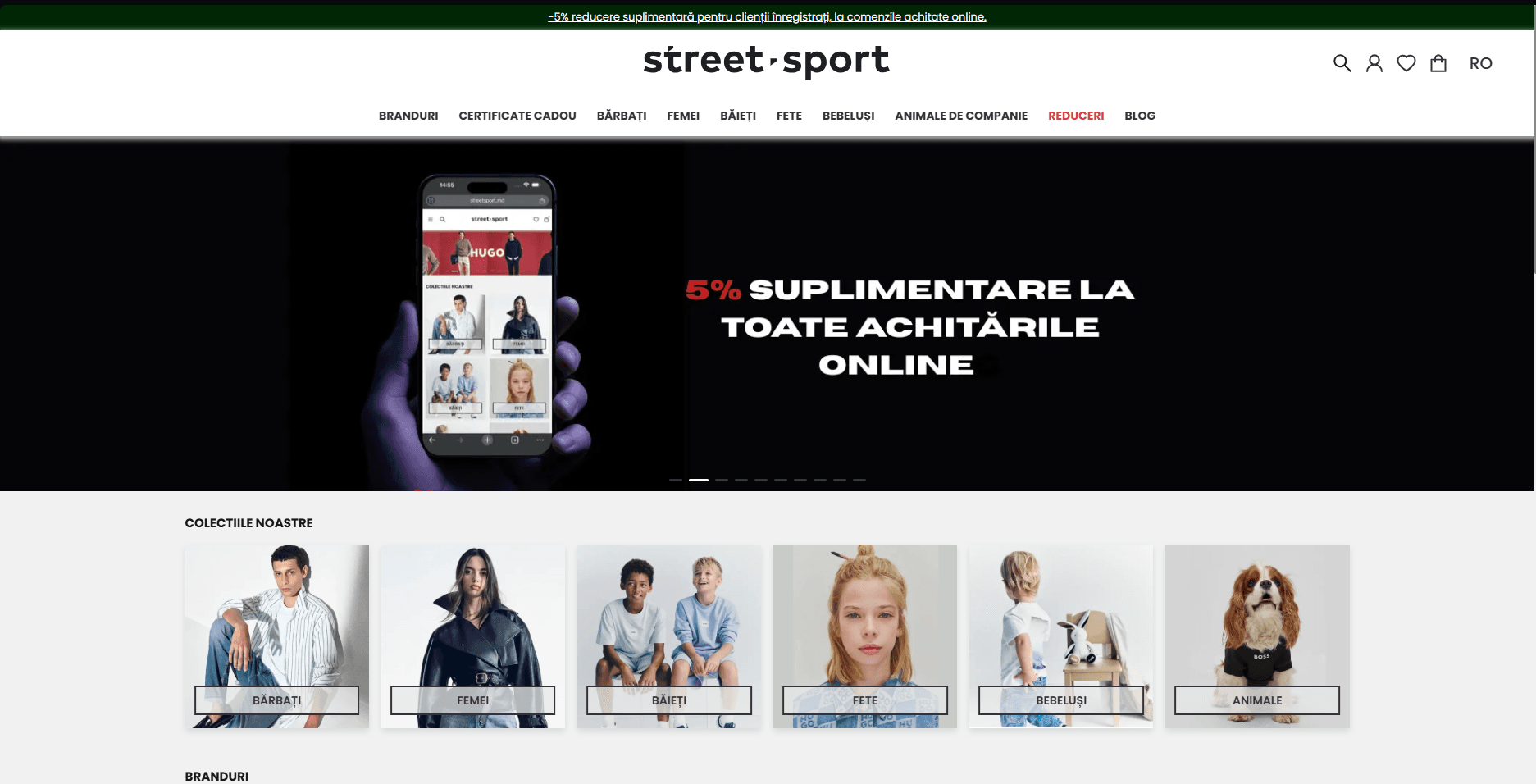
My first project as an in-house marketing manager: Meta and Google Ads, tracking, Zoho email marketing, content and Cloudflare. I contributed to the existing website without building it.
Contents
This is a personal account of the start of my career and the work I carried out at Street Sport. I want to explain my contribution precisely: what I implemented, why those activities mattered, and what I learned from a role combining advertising, technical configuration and content production.
The project is included in the ADS Moldova portfolio as the founder’s professional experience. It is not a website built by the agency or an ongoing engagement. This account concerns the period when I worked at the company, and the results mentioned relate to my own experience.
My first project, working inside the company
I worked in the office as marketing manager for the Street Sport multibrand stores. It was my first project applying digital marketing knowledge in a real business. My responsibilities included campaigns, measurement tools, customer communication and promotional content.
The website already existed. I contributed to its development and improvement from a marketing perspective, without claiming responsibility for building the original online store.
Working in the office brought me close to the products and the stores’ commercial context. An offer needed an advertisement, supporting visuals and an explanation on the website. For me, the project meant connecting these activities instead of treating every platform as an isolated task. That practical experience helped me understand the everyday work behind a consistent digital presence.
Meta Ads and correct Pixel configuration
I created Meta campaigns and correctly configured Meta Pixel on the website. The aim was to connect promotion with visitor actions and evaluate campaign results more effectively. In my experience on this project, the Meta campaigns achieved positive ROI.
I am not publishing an exact percentage or return multiplier here. The result I can describe is positive ROI, without turning it into a promise for other businesses.
Creative work and measurement needed each other. A promotional image attracts attention, but interpreting results also requires appropriate technical configuration. Installing the Pixel was part of my responsibility alongside creating campaigns. This project taught me not to limit advertising evaluation to reactions and views: a business needs to understand the relationship between investment and commercial results.
Google Search, Performance Max and Google Tag
I created Google Search and Performance Max campaigns and connected Google Tag. These activities complemented Meta promotion and gave the store additional ways to reach its audience.
My contribution included campaign preparation and tracking configuration. The Google campaigns are described as work delivered; the positive ROI statement in this case refers to Meta campaigns.
It was important to me that each component had a clear commercial purpose. Search addressed intent expressed through a query, while Performance Max formed part of the store’s advertising mix. Campaign configuration and tracking were parts of the same implementation work. The relevant experience is hands-on work with these campaign types and connecting them to the existing website.
Zoho and an existing list of around 2,000 email addresses
The company already had around 2,000 customer email addresses. I integrated Zoho for email marketing so that the list could support communications such as offers and thank-you messages after a purchase.
These were existing company contacts. The integration made use of contacts the store already had.
The integration was intended to continue the customer relationship. Someone who had already purchased could receive relevant communication rather than having their relationship with the store end at the first transaction. The work described here is the integration of an email marketing tool for these uses. For me, this was a step from simply storing contacts to using a dedicated tool for customer communication.
Cloudflare: DDoS, anti-spam and anti-bot protection
I added Cloudflare protection to the website, including measures against DDoS attacks, spam and unwanted automated traffic. This was a technical contribution to the existing site’s infrastructure alongside my marketing work.
The aim was to send campaign traffic to a better-protected website. Technical protection complemented the promotional work.
This experience showed me that promotion cannot be completely separated from the destination’s operation. Advertising needs an accessible website, and protection tools are part of caring for that visitor journey. This meant considering the visitor’s journey beyond the advertisement that brought them to the site.
A new blog and articles about the brands
The website had no blog, so I created that section and wrote articles about the store’s brands. Alongside products and commercial offers, the site gained a place for editorial content.
The objective was to provide more context around the brands and develop material for online communication. This contribution concerns the blog and its writing, rather than the construction of the entire website.
A multibrand store has more to explain than a product’s price. Articles provided room to introduce brands and discuss subjects that do not fit into a short advertisement. For me, writing them brought together research, clear expression and the store’s commercial interests. The blog became another way to build communication around the store’s offer.
Promotional creatives, offers and website materials
I created numerous promotional materials for offers and discounts, including visual elements for the website. The work combined the commercial message with the creatives used to communicate it.
These design contributions supported the store’s communication and campaigns. They were improvements to the presentation of an existing website, not a claim that I designed or developed the whole site from scratch.
A discount needs to be understood quickly, and visual material should help people recognize the product and the offer. In this role I applied design knowledge to concrete commercial situations. It was practical work in making information clearer and maintaining the connection between an advertisement’s message and what the visitor then sees on the website.
Telegram, LinkedIn, Pinterest, Blogger and X
I created accounts and, where the platform format suited them, groups or channels on Telegram, LinkedIn, Pinterest, Blogger and Twitter, now called X. The purpose was to expand the company’s online presence and create additional points of contact with its audience.
This activity complemented the campaigns and blog. My contribution concerned the creation and organization of these points of presence.
For me, expanding that presence meant treating the website, articles, advertising and public profiles as connected parts of communication. Creating accounts was a concrete part of that work, alongside preparing material that could be shared. The experience helped me understand the difference between simply having a profile and the ongoing work required to communicate usefully on a platform.
A BOSS video filmed in the store
I filmed a video for the BOSS brand in the store, then edited and published it. I took part in the full process, from filming on location to preparing the finished material for communication.
This example shows that my role included video production alongside campaign management, tracking and written content. The material was produced directly in the store’s own setting.
The shoot was connected to the real store environment and the brand presented there. Its professional value for me was the opportunity to take a piece of content from an idea through to publication. It adds another dimension to a hands-on role in which the same person contributed both to preparing the message and to executing its visual presentation.
Why I left and chose to build my own business
I left Street Sport voluntarily because I wanted to build my own business. From my perspective, the €500 salary did not reflect the breadth of my office-based marketing manager responsibilities or the results I could demonstrate. We did not reach an agreement on higher pay.
This is my personal account of that career decision. I am happy with the step I took: I kept the experience I had gained and chose to use it to develop my own project.
I do not view this beginning only through the lens of leaving. Street Sport was where I applied my knowledge, worked with real tools and saw how broad a marketing manager’s responsibilities can become. My decision to work independently reflected both a desire for autonomy and how I valued my work. That personal perspective explains the path I took towards ADS Moldova.
The Street Sport case study summarizes my contribution. For similar work, explore Meta Ads, Google Ads, email marketing and Cloudflare protection.
What I kept from this first project is an approach to work: explain my personal contribution clearly, connect tools to business objectives, and describe results without adding figures for presentation alone. That is the context in which Street Sport belongs in my portfolio.
Your notes
Notes stay in this browser.